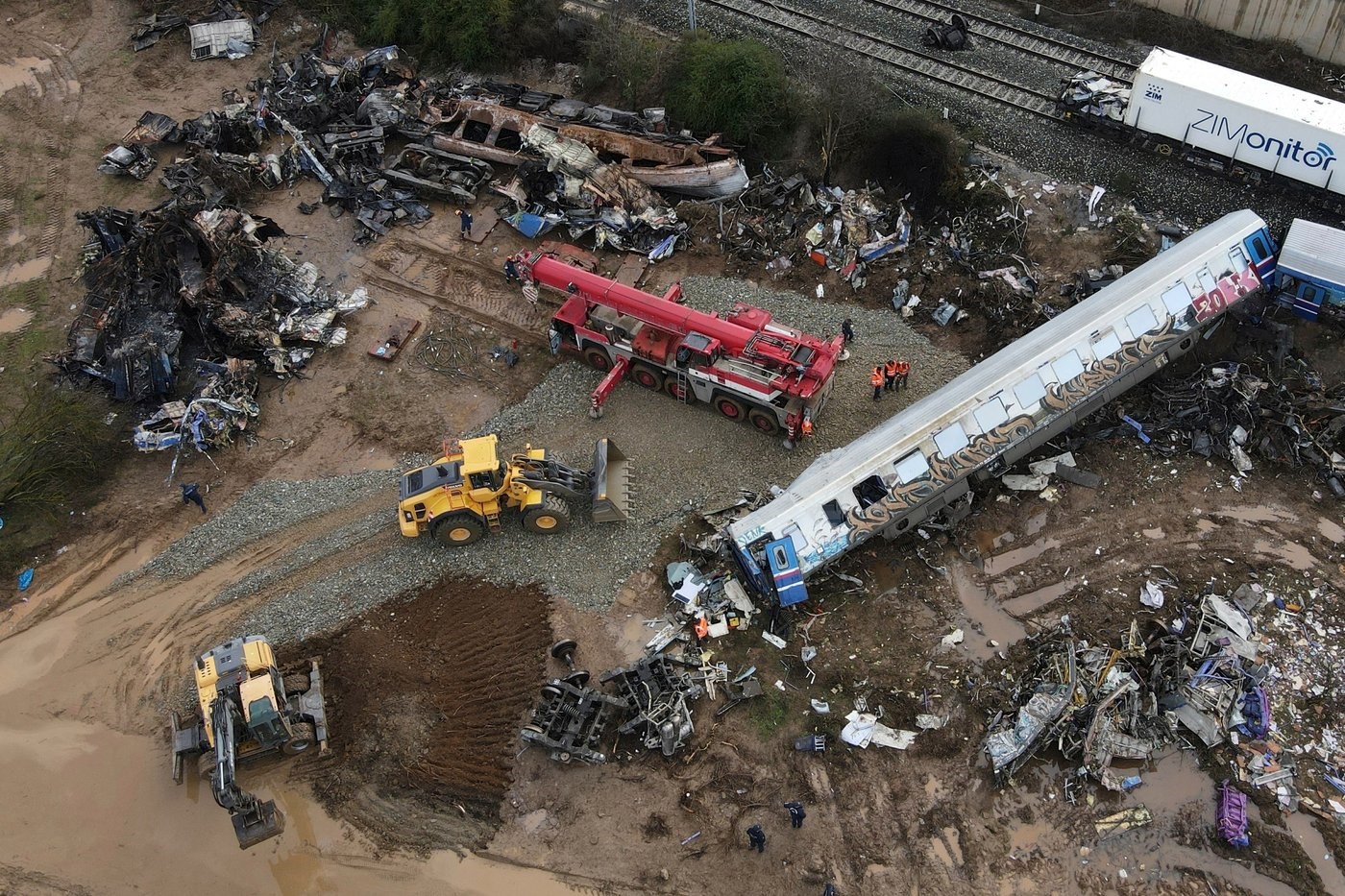
FILE - Rescuers at the site of a train collision in Tempe, about 376 kilometres (235 miles) north of Athens, near Larissa city, Greece, Friday, March 3, 2023. (AP Photo/Giannis Papanikos, File)
January 18, 2026 - 8:59 PM
MADRID (AP) — A high-speed train derailment in southern Spain has left at least 39 people dead and injured more than 150, according to authorities.
Rail travel in Europe is a common, relatively affordable and convenient way for many Europeans and tourists to travel. Major railway accidents have decreased since 2010, according to the European Union, yet the crash in Spain is a reminder of how deadly they can be when they happen.
Here is a look at some of the most deadly train, tram and subway crashes in Europe in recent years.
September 2025: A popular street car in Lisbon derailed and crashed into a building, killing 16 people and injuring 21. A preliminary report into the funicular crash found that an underground cable acting as a counterweight between the two tram cars was unsuitable for use and broke.
February 2023: A passenger train in northern Greece carrying hundreds of people collided at high speed with an oncoming freight train, resulting in a fiery wreck that killed 57 people. An investigative report into the crash blamed human error, outdated infrastructure and major systemic failures.
July 2016: Two Italian commuter trains collided head-on between towns in the southern region of Puglia, killing 31 people and injuring scores more. An investigation found an error of communication between the stations that each train had departed from.
July 2013: A commuter train in Spain hurtled off the rails as it came around a bend near the northwestern city of Santiago de Compostela, killing 80 and injuring 145 others. An investigation showed the train was traveling at 179 kph (111 mph) on a stretch with an 80 kph (50 mph) speed limit when it left the tracks and smashed into a wall.
February 2010: Two commuter trains just outside Brussels slammed into one another during morning rush hour when one ran a red light. In all, 19 people were killed and 171 injured in Belgium's worst train crash.
June 2009: A freight train in Italy carrying gas derailed at the Viareggio station, near the Tuscan city of Lucca, and exploded, killing 32 people. Poorly maintained axles of the train were blamed.
July 2006: A subway train traveling at excessive speed crashed in an underground tunnel in the eastern Spanish city of Valencia, killing 43 people and injuring scores more. It took 13 years for a court to find four managers of the city’s subway system guilty of negligent manslaughter for not taking the necessary safety measures needed to prevent the tragedy.
January 2006: The failure of a braking system on a train in Montenegro caused it to derail and plunge into a ravine outside the capital, Podgorica. The crash killed 45 people, including five children, and injured a further 184. It was the worst train disaster in Montenegro’s history.
November 2000: A cable car on a funicular railway in Austria caught fire in a mountain tunnel in Kaprun, killing 155 people. Those who died were skiers and snowboarders heading to the slopes of the Kitzsteinhorn mountain.
October 1999: A train heading out of London’s Paddington station went through a red light and crashed into an incoming high-speed train, killing 31 people. Around 400 people were injured.
June 1998: A high-speed train in Germany traveling at 200 kph (125 mph) collided with a bridge at Eschede, causing it to collapse. The crash killed 101 people and injured a further 100. It was Germany’s deadliest postwar rail disaster.
News from © The Associated Press, 2026