Abby Sewell, John Leicester And Edith M. Lederer
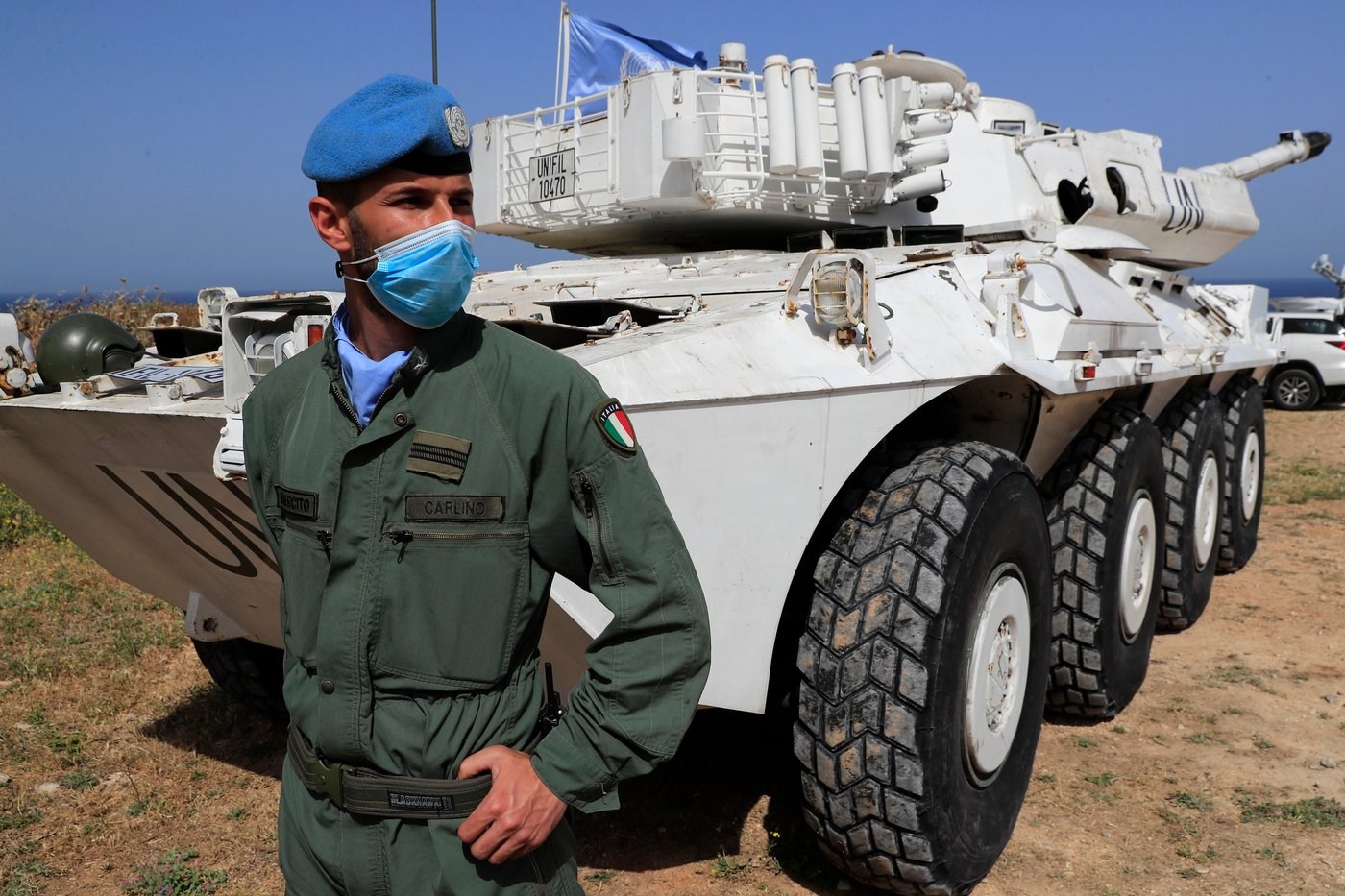
FILE - An Italian U.N. peacekeeper soldier stands guard at a road that links to a United Nations Interim Force In Lebanon, or UNIFIL base, in Naqoura town, Lebanon, on May 4, 2021. (AP Photo/Hussein Malla, File)
February 06, 2026 - 5:01 AM
BEIRUT (AP) — U.N. peacekeepers patrolling southern Lebanon have faced a dramatic surge of “aggressive behavior” by Israeli forces over the last year, including drone-dropped grenades and machine-gun fire, according to an internal report seen by The Associated Press.
The report by one of the 48 nations that together have more than 7,500 peacekeepers in southern Lebanon says the number of incidents jumped from just one in January to 27 in December. The hilly frontier zone where the UNIFIL force patrols has seen decades of cross-border violence. Israel and Lebanon's Hezbollah militants fought a full-scale war in 2024.
The targeting of peacekeepers appears aimed at undermining the international force and strengthening Israel’s military footprint along the U.N.-drawn border with Lebanon, known as the Blue Line, the report alleges. It was shared with AP on condition that the news organization not identify the country whose peacekeepers compiled the findings for internal use by their senior command.
Israel has long mistrusted UNIFIL, accusing it of failing to prevent Hezbollah from building up its military presence along the border in violation of ceasefire agreements going back two decades.
The growing catalog of run-ins comes as a half-century of international peacekeeping efforts along the border face an uncertain future. UNIFIL’s mission is scheduled to end this year and U.S. President Donald Trump ’s administration regards it as a waste of money.
Israel says it tries to reduce harm
In a statement to AP, the Israeli military said it “is not conducting a deterrence campaign against UNIFIL forces" and is working within accepted frameworks to dismantle Hezbollah, largely based in southern Lebanon.
The military “takes steps to reduce harm to UNIFIL forces and other international actors operating in the area,” it said.
UNIFIL said in a statement that “the number of attacks on or near peacekeepers, as well as aggressive behavior toward peacekeepers, have increased since September 2025,” with most of those incidents attributed to the Israeli military.
“The majority of incidents do not involve physical harm to peacekeepers, but any action that interferes with our mandated activities is a matter of concern,” it said.
The U.N. force has reported additional incidents this year. An Israeli tank opened fire with small-caliber bullets on a UNIFIL post on Jan. 16, it said. This week, it reported that a drone dropped a stun grenade that exploded in the vicinity of a peacekeeping patrol before flying toward Israeli territory.
Report details array of incidents
The report seen by AP details multiple instances in 2025 of grenades being dropped by Israeli drones near UNIFIL patrols, including an attack in October that wounded a peacekeeper, as well as machine-gun fire near UNIFIL positions. In some cases, UNIFIL vehicles were damaged.
The last four months of 2025 also saw a surge in incidents of direct fire at all targets from Israeli positions on both sides of the Blue Line, the report says. Such incidents spiked to 77 in December, up from just two in January, it says.
UNIFIL vehicles and positions are clearly marked as belonging to the U.N., and Hezbollah militants have not maintained a visible presence or fired on Israeli forces in recent months.
The report says “it cannot be excluded” that Israel is using the incidents to maintain a military presence north of the border and prevent people who have fled the zone from returning.
Israel-Hezbollah conflict
After the Oct. 7, 2023, Hamas -led attack on Israel that triggered war in Gaza, Hezbollah began firing rockets from Lebanon into Israel in support of Hamas and the Palestinians.
Israel responded with airstrikes and shelling. The low-level conflict escalated into full-scale war in September 2024, later reined in but not fully stopped by a U.S.-brokered ceasefire two months later.
Since then, Israel has accused Hezbollah of trying to rebuild in the south, in violation of the ceasefire, and has carried out near-daily strikes in Lebanon that it says target Hezbollah militants and facilities. Israeli forces also continue to occupy five hilltop points on the Lebanese side of the border. Hezbollah has claimed one strike against Israel since the ceasefire.
Spraying of chemicals spurs an outcry
The U.N. and Lebanon say Israeli forces dropped herbicide on Lebanese territory on Sunday, forcing a more than nine-hour pause in peacekeeping activities, including patrols.
“The use of herbicides raises questions about the effects on local agricultural lands, and how this might impact the return of civilians to their homes and livelihoods in the long-term,” U.N. spokesperson Stéphane Dujarric said. There was no Israeli comment.
Dujarric added that “any activity” by the Israeli military north of the Blue Line violates a U.N. resolution adopted in 2006 that expanded the UNIFIL mission, in hopes of restoring peace to the area after a monthlong war between Israel and Hezbollah.
Uncertain future for border area
UNIFIL was created nearly five decades ago to oversee Israel's withdrawal from southern Lebanon after its troops invaded in 1978.
The U.N. Security Council voted last August to terminate its mission at the end of 2026.
Israel had long sought an end to its mandate, saying UNIFIL failed to keep Hezbollah away from the border. Under the 2006 U.N. ceasefire, the Lebanese army was supposed to maintain security in the south with backing from UNIFIL and militants were to disarm.
Hezbollah supporters in Lebanon have frequently accused UNIFIL of collusion with Israel and have sometimes attacked its patrols.
The Lebanese government says UNIFIL serves a necessary purpose. Prime Minister Nawaf Salam said in December that Lebanon will need a follow-up force to fill the vacuum and to help Lebanese troops along the border as they expand their presence there.
In an AP interview this week, Lebanese Deputy Prime Minister Tarek Mitri said several proposals are under discussion.
One possibility is an expansion of the United Nations Truce Supervision Organization, or UNTSO, which maintains a small observer force in Lebanon. The European Union has also offered to contribute to an international observer force, he said.
Whatever the arrangement, Mitri said: “We need a neutral, internationally mandated force to observe and make sure that whatever is agreed upon in negotiations is fully respected."
___
Leicester reported from Paris and Lederer from the United Nations. AP journalist Josef Federman in Jerusalem contributed.
News from © The Associated Press, 2026