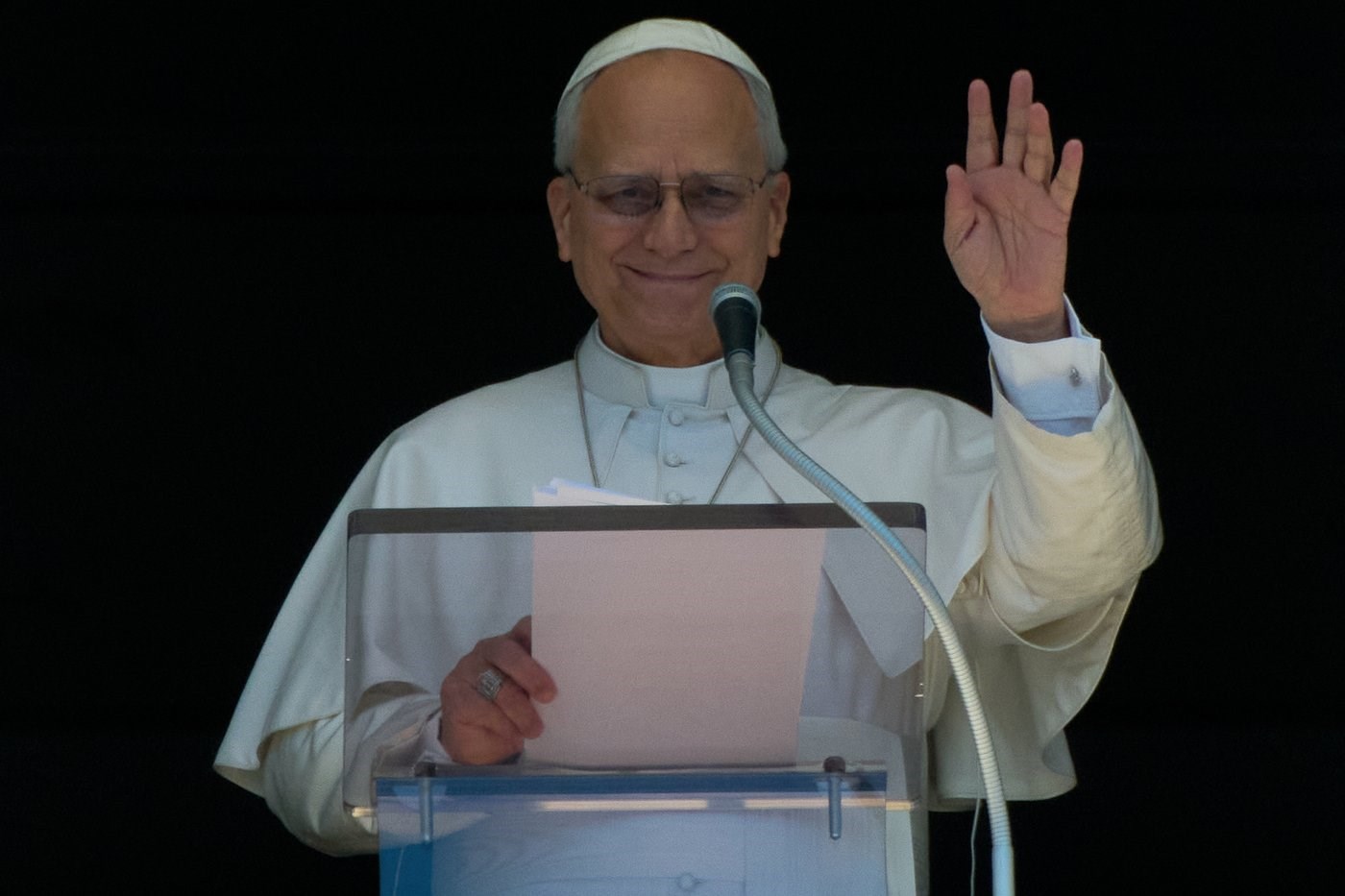
Pope Leo XIV delivers his blessing as he recites the Regina Coeli noon prayer from the window of his studio overlooking St.Peter's Square, at the Vatican, Monday, April 6, 2026. (AP Photo/Andrew Medichini)
Republished April 07, 2026 - 1:15 PM
Original Publication Date April 07, 2026 - 11:51 AM
ROME (AP) — Pope Leo XIV said Tuesday that U.S. President Donald Trump’s threat to destroy Iranian civilization was “truly unacceptable” and said any attacks on civilian infrastructure violate international law.
In some of his strongest comments yet against the war, the American pope urged Americans and other people of good will to contact their political leaders and congressional representatives to demand they reject war and work for peace.
“Today as we all know there was this threat against all the people of Iran. This is truly unacceptable,” Leo said as he left his country house in Castel Gandolfo, south of Rome.
He was referring to Trump’s threat that a “whole civilization will die tonight” if Iran fails to meet his latest deadline to strike a deal that includes reopening the Strait of Hormuz.
Leo recalled his Easter appeal for peace and to reject war, "especially a war which many people have said is an unjust war, which is continuing to escalate, and which is not resolving anything.”
He invited all people of good will to contact their political leaders and congressional representatives to remind them that attacks on civilian infrastructure are “against international law" and also are a "sign of the hatred, the division, the destruction human beings are capable of, and we all want to work for peace.”
In recent weeks, history’s first U.S.-born pope has escalated the tone of his opposition to the U.S.-Israeli war in Iran after initially issuing muted appeals for peace and dialogue.
Last week for the first time, Leo publicly named Trump in saying he hoped the U.S. president was truly “looking for an off-ramp.”
The Vatican has a tradition of diplomatic neutrality and it is rare for a pope to name a political leader or country specifically in a critical way. But the war in Iran has nudged even a reserved pope to break with typical protocol.
On Tuesday, Leo didn’t cite Trump by name but in comments in English he urged people to contact their political leaders and congressional representatives “to ask them, tell them to work for peace and to reject war.”
“We have a worldwide economic crisis, an energy crisis, (a) situation in the Middle East of great instability, which is only provoking more hatred throughout the world,” he said.
He said the message to political leaders should be: “Come back to the table, let’s talk, let's look for solutions in a peaceful way and let’s remember especially the innocent children, the elderly, sick, so many people who have already become or will become victims of this continued warfare.”
The Vatican is particularly concerned about how the Iran conflict has spread to a renewed war in Lebanon between Israel and the Iranian-backed Lebanese militant Hezbollah group. The Vatican fears for Christians in southern Lebanon, who are an important bulwark for the church in the region.
Earlier in the day, the Vatican released a special message from Leo to the residents of Debel, Lebanon after a convoy carrying over 40 tons of aid led by the Vatican was prevented from arriving with an Easter shipment. It was canceled for what Lebanon’s Maronite Church said were “security reasons.”
In the message, Leo expressed solidarity with the “injustices” that the Christians of southern Lebanon are enduring and compared them to Christ’s suffering.
“In your misfortune, in the injustice you endure, in the feeling of abandonment you experience, you are very close to Jesus. You are close to Him also on this Easter Day when He conquered the forces of evil, and which resonates for you as a promise of the future,” read the message, which was written in French and was signed by the Vatican secretary of state, Cardinal Pietro Parolin.
Leo visited Lebanon late last year on his first international trip as pope.
___
Associated Press religion coverage receives support through the AP’s collaboration with The Conversation US, with funding from Lilly Endowment Inc. The AP is solely responsible for this content.
News from © The Associated Press, 2026