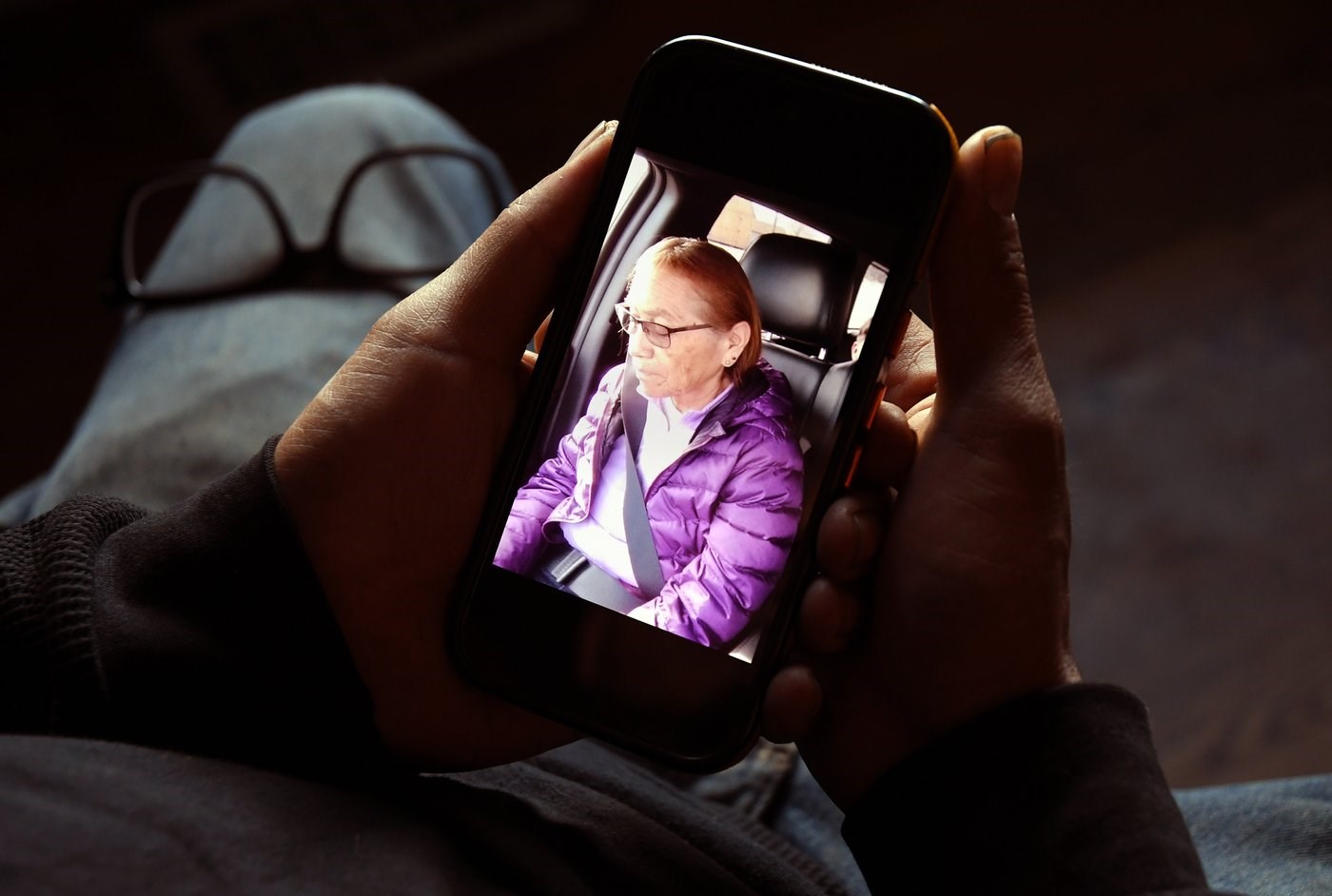
FILE - Gerald Begay, whose mother Ella Mae Begay went missing from her home, shows a photo of her on his phone in Denver, Thursday, April 2, 2026. (AP Photo/Thomas Peipert,File)
Republished May 08, 2026 - 12:23 PM
Original Publication Date May 07, 2026 - 9:06 PM
PHOENIX (AP) — The only person ever charged in the unsolved 2021 disappearance of Navajo elder Ella Mae Begay, whose case became emblematic of a crisis fueled by disproportionately high rates of violence faced by Native Americans, has been sentenced to five years in federal prison.
U.S. District Judge Douglas Rayes in Phoenix on Friday accepted an agreement in which Preston Henry Tolth pleaded guilty to robbing Begay. Under the agreement, Tolth was credited with three years’ time served and prosecutors dropped an assault charge and agreed not to prosecute him in the future if Begay’s case develops.
The sentencing effectively closes a yearslong case that has been troubled by a lack of physical evidence and the suppression of a confession from Tolth, who also is Navajo.
During Friday's hearing, family members urged Rayes to reject the agreement. Begay's niece tearfully reiterated that they didn’t want Tolth released without him leading investigators to Begay.
“A 62-year-woman is still nowhere to be found. No amount of time is enough if he won’t tell us where she is,” said Seraphine Warren, who later left the courtroom when it was apparent the judge was moving forward with the sentencing.
A beloved grandmother of nine and talented weaver of Navajo-style pictorial rugs, Begay was 62 when she vanished from her home in Sweetwater, Arizona, on the Navajo Nation in June 2021. Tolth’s sentencing comes amid a week of awareness for the Missing and Murdered Indigenous Peoples movement, which highlights the disproportionate number of Native Americans who are missing or have been killed.
In the years since Begay went missing, her family members have organized searches, pushed law enforcement for answers and even walked across the country to keep a public spotlight on her case. Advocates have compared Begay’s case to that of Gabby Petito, a young white woman whose disappearance the same summer drew a frenzy of news coverage, social media attention and law enforcement action that ultimately led to the discovery of her remains in Wyoming.
Navajo Nation police and FBI agents identified Tolth as a suspect within days of her disappearance. Tolth, whose father was dating Begay’s sister, initially denied any involvement. In a later interrogation, an FBI agent lied to Tolth, telling him police found Begay’s truck and were processing evidence that would implicate him. In response, Tolth waived his right to remain silent and confessed to stealing Begay’s pickup truck, beating her and leaving her for dead on the side of the road.
It is typically legal for U.S. law enforcement to fabricate evidence during interrogations. But Rayes ruled that in this instance, the FBI agent failed to “scrupulously honor” Tolth’s initial refusal to speak and threw the confession out. A panel of appellate court judges agreed.
In the absence of that confession, U.S. Attorney Tracy Van Buskirk said Friday that the plea agreement was the government's best attempt at securing a reasonable sentence. Speaking about Tolth’s effort to help investigators find Begay, Van Buskirk said Tolth wasn’t familiar with the Sweetwater area and had been drinking alcohol on the night when he robbed her.
In court Friday, Begay’s son Gerald Begay called the agreement a “failure.”
“It shouldn’t be that way,” Gerald Begay told the judge.
Jane McClellan, a lawyer for Tolth, said her client acknowledged robbing Begay, showed officers where he thought he might have left her on the night of the crime and doesn't have further information.
“He is remorseful for his actions,” McClellan said. “He has taken responsibility for his actions.”
In an unusual move, Rayes rejected a previous plea agreement that called for Tolth to be released after three years of time served, saying it was overly lenient. Begay's family members had presented anguished testimony and said they would prefer to the case went to trial.
Navajo Nation public safety director Michael Henderson said finding Begay is still a priority for tribal law enforcement.
“One of the hindrances is that the federal investigation is still pending,” Henderson said.
Once federal law enforcement officially close the case, Henderson said, Navajo Nation police may gain access to information that will aid their search.
News from © The Associated Press, 2026