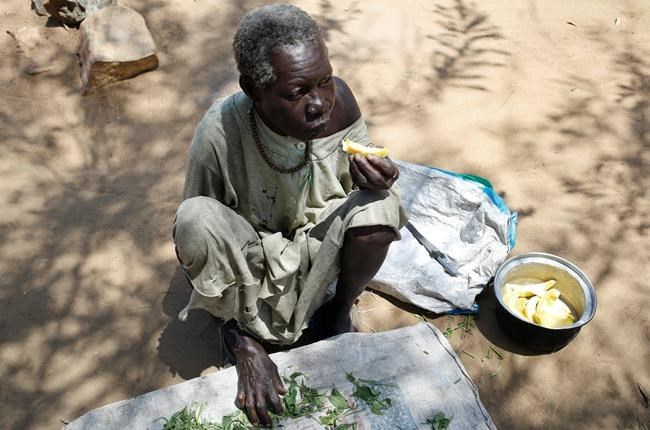
In this photo taken Sunday, March 19, 2017, Rosa Lyo eats fruit at a camp for those who were previously displaced by fighting, near a church in Rajaf, South Sudan. As the world marks World Water Day on Wednesday, March 22, 2017 more than 5 million people in South Sudan do not have access to safe, clean water, compounding the problems of famine and civil war, according to UNICEF. (Matthieu Alexandre/Caritas Internationalis via AP)
Republished March 22, 2017 - 11:01 AM
Original Publication Date March 22, 2017 - 6:45 AM
KAMPALA, Uganda - Nearly a third of people in sub-Saharan Africa do not have access to safe drinking water, the World Water Council said Wednesday, urging governments to contribute adequate amounts of their budgets toward projects aimed at making safe water widely available.
"There is an absolute necessity to increase water security in order to overcome the challenges brought on by climate change and human influence ... We need commitment at the highest levels," the organization's president, Benedito Braga, said in a statement marking World Water Day.
Africa and Asia are the most affected by scarcity of safe water, with Papua New Guinea, Equatorial Guinea and Angola reporting that clean water is available to less than 50 per cent of their populations, the statement said.
Globally, at least 1.8 billion people use a drinking-water source contaminated with feces, and half of the world's population will be living in water-stressed areas by 2025, according to the World Health Organization.
The water problem is particularly serious in sub-Saharan Africa, where 32 per cent of people lack access to clean water and where some of the world's poorest live. Water-borne diseases like cholera are common. Africa's population is also growing quickly, putting even more pressure on available sources of safe water.
In Africa's largest city, environmental activists protested for better access to clean water. Community leaders in Lagos, Nigeria, said residents of the sprawling city of 21 million are suffering.
"When we fetch the water, it foams and smells like petrol and detergent was poured into it," Barakatu Elegbede said. "It will just be foaming, it's no longer drinkable." Residents blamed unmaintained petroleum pipes buried underground for decades.
Less than 20 per cent of Lagos residents have access to clean water, said activist Akinbode Oluwafemi.
Han Seung-soo, the U.N. special envoy for disaster risk reduction and water, told Wednesday's opening of The First General Assembly Water Dialogue that "during the past decade, water-related disasters have struck more frequently and have become more severe."
He said over 90 per cent of human loss caused by disasters has been water-related.
___
Associated Press videographer Lekan Oyekanmi in Lagos, Nigeria, and writer Edith M. Lederer at the United Nations contributed.
News from © The Associated Press, 2017